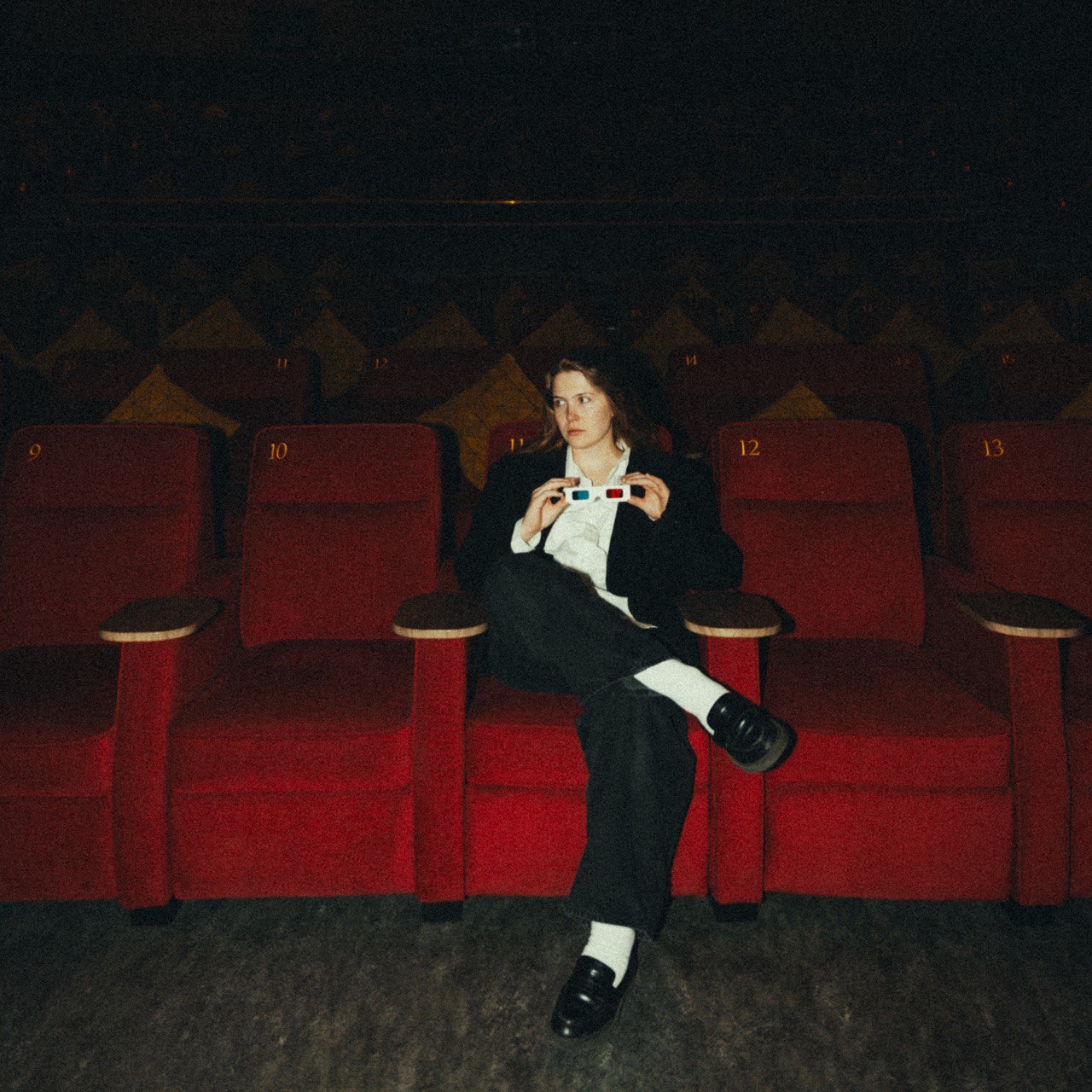
When she was six, she hid from her piano teacher under the piano. Now Cupid Girl, also known as Julie Engelsviken, has played her first gig abroad at Spot Festival. Delfinen spoke to her about first songs, creativity and a specific question in the music industry that only women are asked.
Af Caroline Lemée
Cupid Girl has been compared to Fleetwood Mac, Wet Leg and Haim. In her own words this is her music:
“I think I would call it indie pop, but it also has a lot of rock elements. It’s guitar-driven music. I love the old-school stuff, but I mix it with modern stuff. A lot of synthesized stuff, you can take back to the 80s.”
When did your interest in music begin?
“My parents are opera singers. My father worked as a tenor singer at the national opera in Norway. My mom came sometimes to sing with them, but she also did her own thing where she sang at cafes and stuff. Opera for the people, since opera can be kind of intimidating.”
“I was just hiding under the piano”
“My mom and dad were trying to influence me, I guess, to start with music, but in the more classical form. They made me go to a classical piano teacher and asked if I wanted to join the children’s opera choir. I was like ‘No! I don’t want that’. When I went to the piano lessons, the teacher had an apple that she put inside my hand to get the position of the hands right, so I didn’t play with flat hands. I was just hiding under the piano. I was six at that time.”
“Oh, you have money for that?”
“The piano lessons were very technically strict, and I was more creative. Suddenly I said to my mother: I want to buy a guitar. She was like ‘oh, you have money for that?’ ‘Yeah!’ I was six but I has saved some money and bought myself a guitar. A small children’s one with a red strap. I started to play and teach myself guitar.”
Julie laughs, when asked about her first song.
“I was like seven or eight, and it was about my mother and father being stupid. Like, making me do homework and eat more fish, and that I couldn’t stay out too late and so on.” But when she went to music school in Kristiansand, she could suddenly make more serious songs. “Everything I visualized or had in my mind, I was able to make, because I started to produce with the music software program, Logic.”
Why ‘Cupid Girl’?
“Cupid Girl came from me feeling like I was a hopeless romanticist and maybe I was claiming that name in, like, an ironical way. Kind of like, ah, I’m a Cupid Girl. Maybe from opera as well. Opera is very dramatic and very spectacular in expression and there’s a lot of emotions. It’s always a tragedy in opera. Very Romeo and Juliet. It’s kind of, if you don’t love me, I will die!”
Which song came easiest to you?
“I think ‘I Drop Everything’ was kind of immediate. It took maybe three or four hours. I Drop Everything is maybe the catchiest song I have.”
What are some lyrics that you’re really proud of so far?
“I’m very proud of ‘Where Are You Tonight?’. When I wrote that lyrics, I was like, wow, this is something above my level of what I have written before.”
She recites:
“Counting the unhappy endings
Looking at the cast portrayed
Unconventional love on screen always ends with woes!
Oh, that’s just how it goes
I can’t shake these lousy feelings
I don’t wanna fight
And all I’ve said, please don’t believe it
I don’t wanna fight
Oh, oh tell me baby, where are you tonight?”
Yeah, but did you really write that?!
Of course she did. But in the music industry, according to Cupid Girl, it’s a question women get a lot.
“Many women feel, when they are in a room writing with people, that they are talked down to. Like they don’t know what they’re doing. Often when [a woman] make a song, people don’t believe you have written it. People question if you have written the song or if you’re just a product.”
And they don’t ask the guys that?
“No.”
Have you experienced sexism?
“I never had a problem working with guys because I know what I want, and I know what I like. I have self-esteem when it comes to writing. When it comes to production and playing an instrument, I’ve always been very secure. But I think many women can feel like they have low self-esteem because of the pressure. But at same there’s more and more women that does well. Right now, the most famous women is Sabrina Carpenter, Taylor Swift, Olivia Rodrigo. All of them are women.”
Women on drugs, right? I mean, it’s still sex, rock & roll?
“I feel like the music industry is getting more and more healthy. Before it was sex, drugs, rock and roll. Now there is a focus on exercising, eating healthily, doing yoga. Meditating. I think the opposite of doing drugs is mindfulness. There’s a book called ‘The Creative Act: A Way of Being’ by Rick Rubin that talks about the spiritual way of creating music. He talks about doing mindfulness and becoming calm to absorb more of the creativeness. Because creation doesn’t come from yourself, it is in the universe, and if you’re more awake, you take in more of the surroundings. “
It doesn’t mean sitting around and waiting for the universe to do the job.
“I don’t believe in luck. People often tell me like, oh, music is hard. You have to be lucky to meet the right people. In some sense, it’s correct that if you play a concert, there could be one guy or a woman who is taking the product to a higher level. But I think it’s more about consistency because if you stop doing music, then you will never make it. You have to keep going.”
But consistency and ambition has a back side
“Sometimes I feel like I’m sacrificing my health. You must have a strong mind to do music because it’s very personal and when you put it out there, people judge you. I’m living out of my comfort zone. Always pushing myself to the limit. It’s easy to burn out if you’re not careful. If I’m totally honest, sometimes it can be mentally draining. It’s my energy and my motivation that drives my career, but as a human, you don’t always have that energy. But I think you can still have a good health and do music.”